

A Movement at a Crossroads | Where Republicans Go After MAGA
Collin Jones, Opinion Editor
For nearly a decade now, the Make America Great Again movement, better known as “MAGA,” has dominated Republican politics at every level of government. While the phrase itself echoes themes of American renewal used by conservative icon Ronald Reagan, it was Donald Trump who transformed it into a defining political movement during his rapid rise in the 2016 election. Since then, MAGA has expanded far beyond a campaign slogan, evolving into a broad and often shifting political identity, with variations ranging from “Make America Strong Again” to “Make America Safe Again,” and even adaptations applied to foreign contexts such as “Make Iran Great Again.” While it can be argued that this movement helped return Republicans to political prominence, it is also worth asking whether its current trajectory is sustainable. Increasingly, the same movement that energized the party may now be limiting its ability to adapt, grow, and govern effectively in the long run.
Now, to be clear, I still support many of the core ideas that initially drew people, myself included, to the MAGA movement. Prioritizing American interests, maintaining a strong military, and avoiding unnecessary foreign entanglements, especially in places like the Middle East, are positions that continue to resonate with a large portion of the Republican base. Those principles are what led me to support Donald Trump when I first became more politically engaged. However, as the movement has evolved, it has begun to drift away from some of those original priorities in ways that are difficult to ignore. In particular, the growing emphasis on foreign policy conflicts has, at times, seemed at odds with the “America First” mindset that once defined the movement. At the same time, there has been an increasing tendency to treat disagreement within the party not as a normal part of politics, but as disloyalty. Conservatives who favor compromise or pragmatic solutions on certain issues are often labeled as “RINOs” and face political consequences for stepping out of line. Taken together, these shifts raise important questions about whether the movement is still grounded in the principles that once made it so effective.
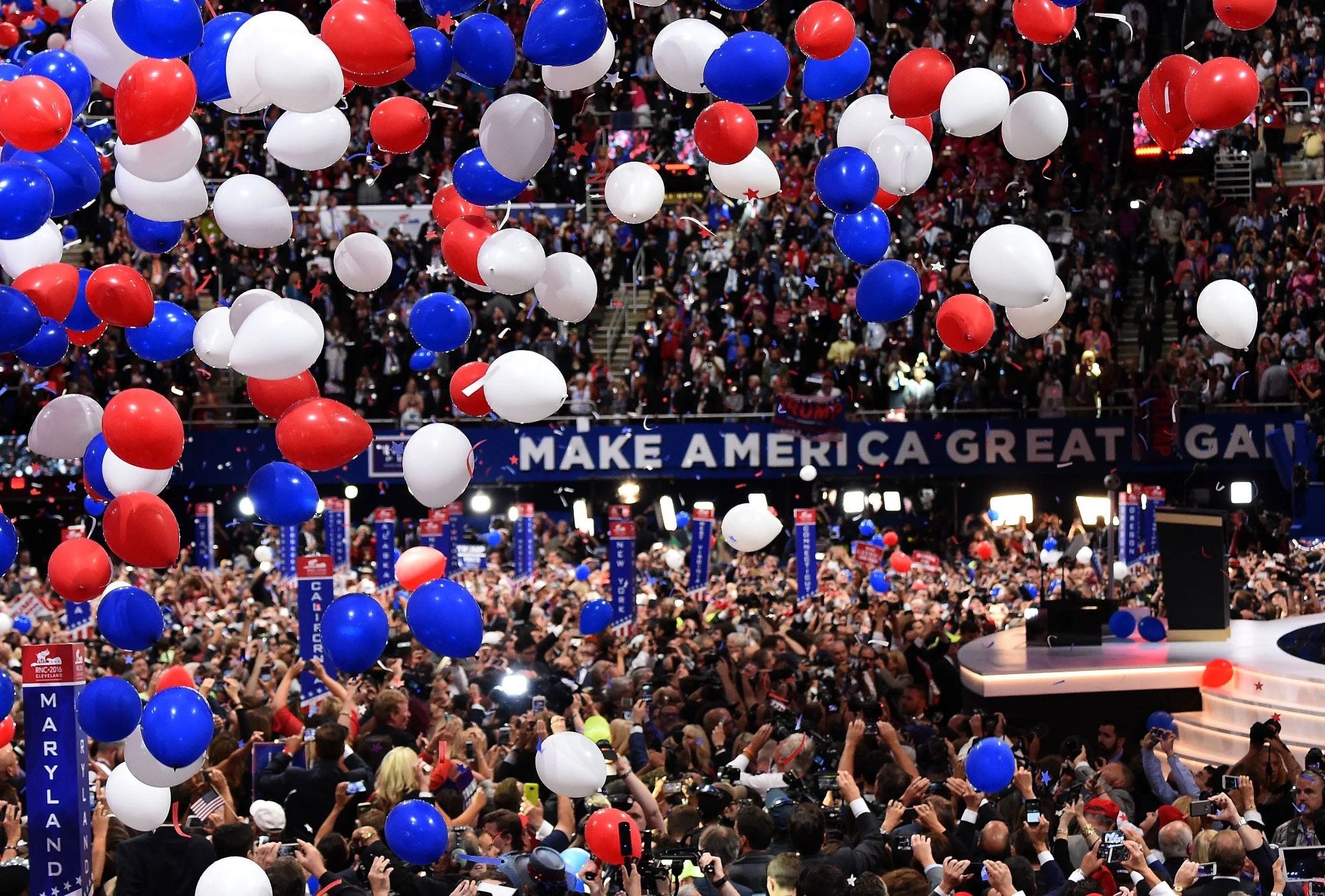
As a self-proclaimed moderate conservative who likes to be pragmatic and logical, politics has always largely been about producing results for the American people, not testing the loyalty of fellow party members. But lately, the modern Republican Party has been less tolerant of internal dissent, treating disagreements not as a chance to strengthen policy, but as disloyalty against the party and its leaders. Prominent names such as Liz Cheney, Mitt Romney, and Adam Kinzinger have been targeted because they were not a perfect fit for what President Trump wanted in the party. Even current Senator Thom Tillis is seemingly retiring, given the primary challenge President Trump has threatened after Tillis was one of three senators who voted against Trump’s landmark legislation known as “The One Big Beautiful Bill.”
If the party cannot handle disagreement and automatically labels moderates such as myself as RINOs (Republicans in Name Only), it will not only weaken the long-term strength of the Republican Party but also make it harder to adapt and remain connected with all Americans. This current approach discourages compromise, pushes out lawmakers who have been loyal and worked tirelessly for the party, and ensures that Republicans appeal only to the most extreme end of the conservative spectrum. And once we appeal only to that select group, our policy will suffer too. Unfortunately, however, the policy has already begun to suffer.
I mentioned earlier that the MAGA movement as a whole has become such a large apparatus that much of its policy platform either does not match what MAGA originally was or does not cleanly align with traditional conservatism. Whether it is being drawn into new foreign conflicts, being fiscally irresponsible, or tolerating political retribution as an acceptable tool to use, I know that I no longer recognize the party that I have supported for as long as I have been politically engaged. We threaten the long-term credibility of what we stand for when we not only betray the values that have always defined what it means to be conservative, but also create or reinforce many dangerous precedents for this country that should be done away with. Just because Democrats sought to use many of the same tools in the previous administration does not mean Republicans should too.
If Republicans and those in the MAGA movement do not make changes now, the consequences will be dire. First, this current trajectory risks alienating moderates and independents while making it more difficult to expand the conservative base, meaning victories become highly dependent on strong voter turnout. Second, when future primaries are decided based on loyalty tests rather than qualifications, Republicans risk not only losing experienced leaders and policymakers, but also creating lower-quality candidates who hurt majorities—or prevent Republicans from gaining them at all. Lastly, the MAGA movement has become too interconnected with the Republican Party. The two have grown so close that once President Trump is gone, I seriously doubt there is a clear plan for what comes next. I also doubt there is anyone else who can carry on the MAGA movement in the way President Trump can. MAGA is not inherently bad, but I believe the Republican Party has an opportunity to evolve and better itself if it is willing to do so.