

This coming November, much of the national political attention will center on the battle for control of Congress, with its outcome determining whether Republicans can continue to advance their legislative agenda in Washington, D.C. Yet beyond Capitol Hill, several governorships in battleground states may prove just as consequential. Among them, Michigan stands out. While I have personally speculated that Republicans are in a precarious position heading into the upcoming midterms, there is one particular GOP candidate and Congressman I remain especially confident in: John James, who has quite a viable path to becoming the next governor of Michigan.
I should acknowledge my own bias at the outset, given that I interned in Congressman James’s Washington, D.C. office this past summer. That experience has, of course, shaped my understanding of his leadership style and approach to public service. But it also provided a firsthand opportunity to observe what he brings to the table should he succeed this November.
A story I often tell about Congressman James came during the first week of my internship, when he came to quiz the interns, myself included, about his district and the surrounding ones. However, there was a stipulation: if we answered incorrectly, we owed him three push-ups; if we answered correctly, he would do three himself. As you might guess, a few minutes later, the Congressman was doing push-ups in his own office. The moment was lighthearted, but it revealed something important. He holds himself to the same standards he sets for others. He did not have to take that time with interns, nor did he have to follow through on the condition so literally, especially given that we were all in suits and ties. But he did. Leadership, especially at the highest levels, often comes down to accountability and example-setting, qualities that are harder to manufacture than campaign slogans.
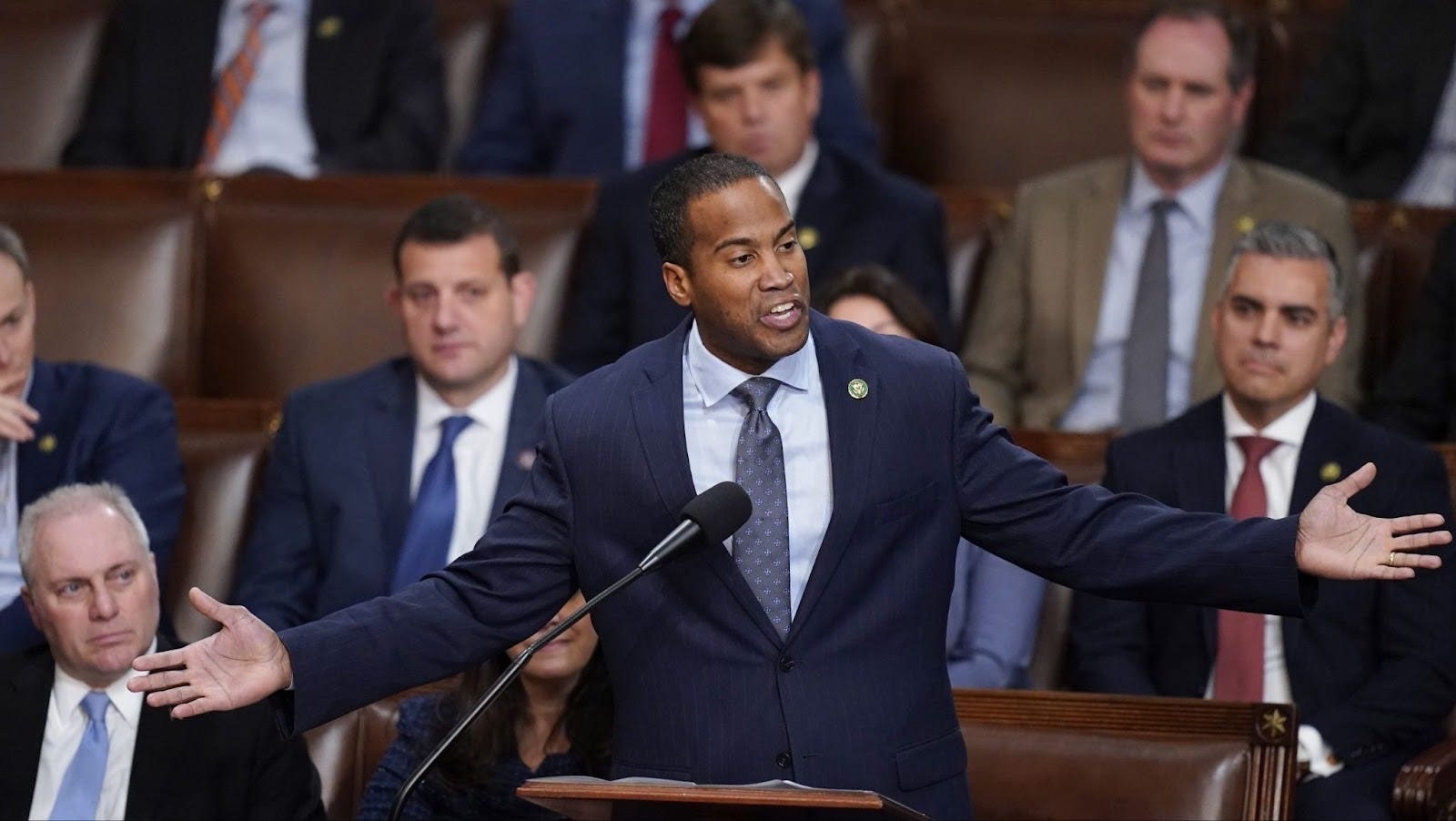
Character alone, of course, does not win statewide races. Record and relevance matter. In Congress, James has advanced policies that align closely with many of Michigan’s economic priorities. His Secure America’s Critical Minerals Supply Act, which recently passed the House, addresses supply chain vulnerabilities that directly affect manufacturing-heavy states like Michigan, where the auto industry depends on reliable access to key materials. His effort to overturn California’s Advanced Clean Trucks rule through the Congressional Review Act reflected concerns shared by many manufacturers and consumers about regulatory burdens and rising costs. And his App Store Accountability Act, aimed at protecting children online, seeks to balance innovation with responsibility in a world where digital access is nearly universal.
Since announcing his gubernatorial candidacy, James has also faced calls from President Donald Trump to remain in Congress rather than pursue the governorship. The argument is understandable given that Michigan’s 10th district is highly competitive, and Republicans would face a more difficult battle to hold the seat without him. But statewide strategy requires a broader calculation. Capturing a governorship in a true battleground state carries long-term policy and political implications that extend beyond a single House district. From my perspective, James stands to be among a very select group of Republicans capable of winning a statewide race in a competitive state in 2026. And with a strong top of the ticket, he could help strengthen Republican performance across Michigan.
The emerging field suggests a competitive three-way race: James as a leading Republican contender, Michigan Secretary of State Jocelyn Benson as the likely Democratic nominee, and Detroit Mayor Mike Duggan running as an independent. Early polling indicates that James is highly competitive in this potential three-way matchup. If those trends hold, and if he successfully builds a coalition that extends beyond the Republican base to include independents and suburban voters, Michigan could very well find itself under new leadership in 2026.