

After interning in the U.S. Congress last summer, I have often been asked two questions that feel almost universal among Americans: Why doesn’t Congress do more? Why don’t they pass more bills? The frustration is almost palpable. I once heard even a political science major say they would never work in Congress because they “want to do something that actually makes an impact.” Having seen firsthand both how much work members of Congress and their staffs put in, along with the real impact of the policies they implement, I found that sentiment almost offensive. How could someone who has never worked a day in the legislative branch of the federal government claim that our policymakers do anything but make policy? And then I remembered the one constant that has existed as long as the institution itself: the never-ending distortion of the American press.
Whether through The New York Times, CNN, Fox News, or even social media platforms, most Americans learn what is happening in their country and the world from one of the many news outlets that exist today. Without them, we would be largely uninformed; most people simply do not have the time or inclination to seek out this information independently. What many fail to realize, however, is that the media is, at its core, a for-profit business. It prioritizes stories that will attract attention and generate revenue. When covering Congress, that often means focusing on the most partisan and divisive bills, which are those that are voted on strictly along party lines and likely to end in stalemate. Because the average American relies on this coverage, they are left with a distorted perception of their policymakers’ productivity.
What I hope to do here is shatter that perception like a baseball through a window. While I cannot speak for every congressional staffer, office, or member, I can speak to what so often goes unseen: where the overwhelming majority of the work actually happens. The American legislative process is not defined by viral interview clips or the heated exchanges that dominate headlines for a day or two. Instead, it is defined by hours of research, drafting, revising, and negotiating, work that is methodical, often tedious, and rarely attention-grabbing. Almost no one sees the hours-long committee hearings that Congress regularly holds, as it does not make for compelling television, and for that reason, it is largely overlooked. Yet it is part of the very foundation upon which policy is built.
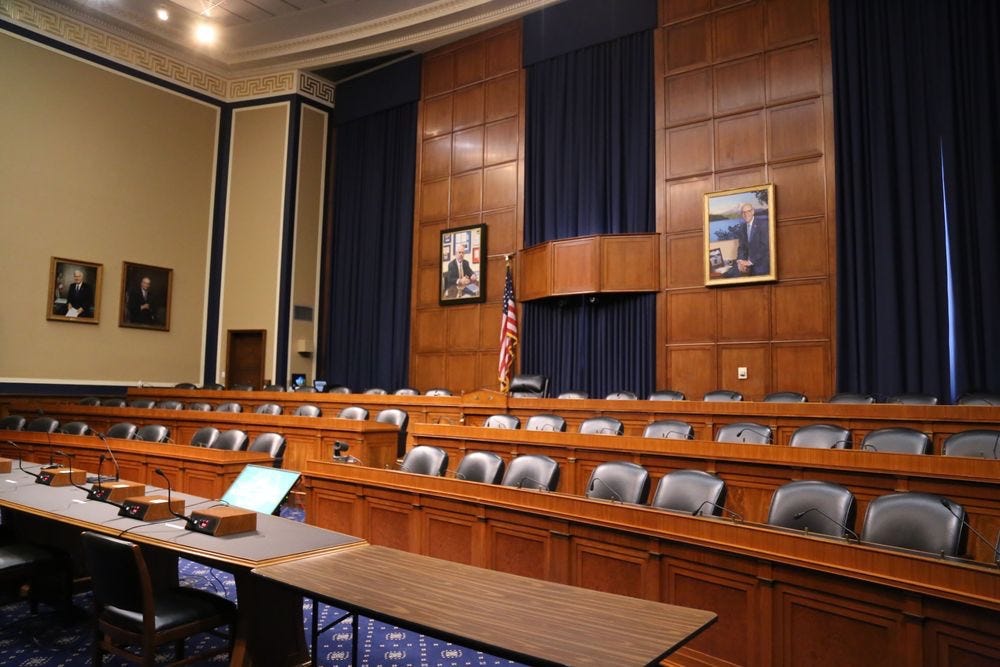
Behind every bill, amendment, and committee hearing is a network of staffers and interns who keep the institution running. These individuals routinely work well beyond a standard 40-hour week, not for impressive salaries or public recognition, but because they believe in the work they are doing. Interns, often under significant financial strain just to be in Washington, put in full-time hours with little to no compensation. Staffers, despite carrying substantial responsibility in shaping legislation, frequently earn far less than their counterparts on K Street. In a city where lobbyists can make multiples of their salaries advocating for particular interests, those tasked with writing and refining policy do so for a fraction of the pay.
And yet, these realities rarely make it into the broader narrative presented to the American public. Instead, what is amplified are moments of gridlock, partisan clashes, and dramatic failures to find common ground. The quieter but equally substantive work — the kind that requires patience, expertise, and persistence — goes largely unreported. As a result, many Americans are left with the impression that little to nothing is being accomplished, when in reality, the opposite is often true. This disconnect carries real consequences. When people believe their institutions are ineffective, trust inevitably begins to erode.
The problem, then, is not simply that Congress at times struggles with division or inefficiency. It is that the lens through which most Americans view Congress is fundamentally incomplete. If more people could see beyond the headlines and into the offices where the real work is done, they might reach a very different conclusion of their own.